
Your living room shouldn’t look like a toy store exploded. Yet somehow, toys multiply overnight and consume every surface.
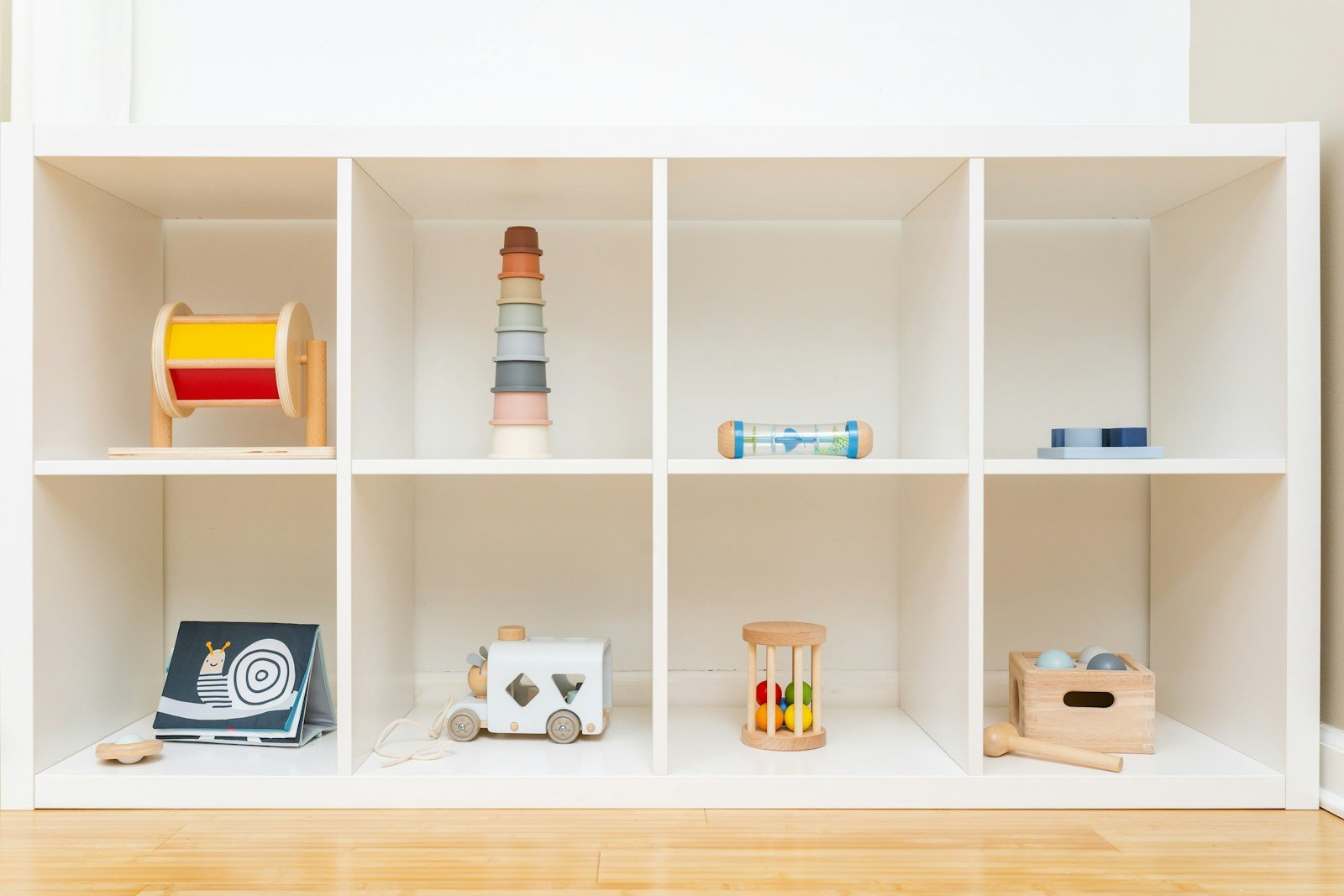
The Minimalist Toy Rotation System cuts visible toys by 75%. Kids play better with less, and you reclaim your space.
Why Too Many Toys Hurt Development
More toys don’t mean more fun. Instead, they create overwhelm and scattered attention.
Kids faced with dozens of options can’t focus. Therefore, they pull everything out without actually playing deeply with anything.
Furthermore, constant toy clutter teaches them that belongings don’t matter. When everything’s always available, nothing feels special.
Research from the University of Toledo found that toddlers with fewer toys showed more creative play and longer focus periods. Less really is more for developing brains.
The Basic Rotation Framework
You’ll divide toys into four rotation bins. Only one bin stays accessible while three hide in storage.
Every two weeks, you swap bins. This makes “old” toys feel new again without spending money.
Setting Up Your Rotation
Step 1: The Great Toy Audit Gather every single toy from every room. Yes, every single one including the ones under beds.
Sort into four piles: Keep, Rotate, Donate, Trash. Be ruthless with broken or unused items.
Step 2: Create Balanced Bins Each rotation bin needs variety. Include building toys, pretend play items, puzzles, and books.
| Bin Component | Examples | Why It Matters |
|---|---|---|
| Building/Construction | Blocks, Legos, Magna-tiles | Develops spatial skills |
| Pretend Play | Dress-up, play kitchen, dolls | Builds imagination |
| Puzzles/Games | Age-appropriate puzzles, board games | Problem-solving practice |
| Creative | Art supplies, Play-Doh, stickers | Self-expression outlet |
Step 3: Storage That Works Use clear bins so you remember what’s inside. Label each bin with numbers or colors, not themes.
Store rotation bins in closets, under beds, or garage shelves. Out of sight means out of mind.
Making the First Swap
Start by reducing current toys by 75%. Whatever’s out right now becomes Bin 1.
Box up remaining toys into Bins 2, 3, and 4. Schedule your first swap for two weeks out.
Meanwhile, watch how your kids play differently. They’ll actually finish puzzles and build complete structures.
Handling the “Where’s My Toy?” Drama
Kids will ask for specific toys from storage. That’s normal and actually positive feedback.
Therefore, explain the rotation system simply: “That toy is resting. It’ll come back in two weeks.”
Add requested toys to a list. When you swap bins, prioritize moving those items into the active rotation.
However, don’t break the system for every request. Learning to wait builds patience and makes reunions sweeter.
Special Category Toys
Some toys don’t rotate well. These stay permanently accessible in small quantities.
Always-Available Toys:
- Comfort items (stuffed animals for sleep)
- Outdoor play equipment
- Musical instruments
- Art supplies (basic crayons and paper)
- Current favorite book (one or two max)
Everything else rotates. No exceptions, even for expensive gifts or special items.
Seasonal Rotation Adjustments
Adapt rotations to match seasons and activities. Therefore, winter bins include more indoor entertainment options.
Summer Bins: Focus on water play, outdoor chalk, bubbles, and sports equipment. Indoor toys stay minimal.
Winter Bins: Heavy on puzzles, building sets, craft projects, and board games. Keep kids engaged during indoor time.
Birthday/Holiday Strategy: New gifts go into storage immediately. Introduce them during the next scheduled rotation, not all at once.
Age-Specific Rotation Tips
Different ages need different approaches. However, the core system works from toddlers through elementary years.
Toddlers (1-3 years):
- Rotate weekly instead of biweekly
- Keep bins small (8-10 items max)
- Include sensory items in every bin
- Expect some overlap in toy types
Preschoolers (3-5 years):
- Standard two-week rotation works perfectly
- Involve them in swap days as helpers
- Increase bin size to 12-15 items
- Theme bins loosely (building week, art week)
Elementary (6-10 years):
- Extend to monthly rotations
- Let them manage their own swaps with oversight
- Larger bins with more complex toys
- Include hobby-specific items
The Donation Pipeline
Every rotation reveals toys kids outgrew. Don’t put these back in storage.
Create a donation box that lives near rotation storage. Therefore, removing outgrown toys becomes automatic during swaps.
When the donation box fills, take it immediately to donation centers. Don’t let it sit around creating new clutter.
Additionally, involve kids in donation decisions. Teaching generosity starts with their own belongings.
Maintaining the System Long-Term
The first three months are hardest. After that, rotation becomes automatic family rhythm.
Mark swap days on your calendar. Tuesday nights or Saturday mornings work well for most families.
Furthermore, stay consistent even when life gets chaotic. Skipping swaps leads to toy creep and system collapse.
Common Rotation Mistakes
Mistake 1: Bins Too Full If bins overflow, you’re not rotating enough toys. Cut each bin by 30% and add items to donation box.
Mistake 2: No Variety Every bin needs balance. Don’t create an “all cars” bin or “only dolls” rotation.
Mistake 3: Too-Frequent Swaps Weekly swaps for older kids create work without benefits. Stick to two-week minimum unless kids are very young.
Mistake 4: Secretive Rotations Involve kids in the process. They should know toys are rotating, not disappearing forever.
When Kids Have Friends Over
Playdate prep is simple. Pull one or two special items from storage if needed.
However, resist the urge to bring out everything. Kids play better with focused options even during playdates.
Return borrowed items to storage immediately after friends leave. Don’t let them join the active rotation.
Space-Saving Storage Hacks
Under-Bed Bins: Rolling storage uses wasted space. Perfect for flat items like puzzles and building sets.
Closet Door Organizers: Hang clear shoe organizers for small toys. Each pocket holds one item type.
Garage Ceiling Storage: Install overhead racks for seasonal outdoor toys. Keeps garage floor clear and items accessible.
Vacuum-Sealed Bags: Stuff animals compress beautifully. Seasonal stuffed toys take up 75% less space sealed.
Frequently Asked Questions
Won’t kids forget about rotated toys? That’s actually the magic. When toys return after weeks away, they feel brand new again.
What if grandparents keep buying toys? Request experiences instead of things. Or ask them to “adopt” bins by funding one seasonal rotation.
Should I rotate books too? Library books rotate naturally. Keep core favorites accessible and rotate the rest like toys.
How many toys should each bin contain? For preschoolers, 12-15 items per bin works well. Adjust based on your space and kids’ play patterns.
Can I rotate toys without kids noticing? Better to be transparent. Mystery disappearances create anxiety. Explained rotations teach patience and anticipation.
Your Rotation Starts This Weekend
Block three hours this Saturday for your toy audit. Get bins, labels, and donation bags ready.
Involve kids in sorting. Let them help decide what rotates and what goes to other children.
Meanwhile, prepare yourself emotionally. Seeing 75% of toys leave the room feels dramatic at first.
Set up Bin 1 Sunday evening. Watch how different playtime becomes with clear space and focused options.
The rotation system isn’t just about clutter control. Therefore, you’re teaching kids that less creates more: more focus, more creativity, and more peace.
Your clutter-free living room starts with one audit and four bins.