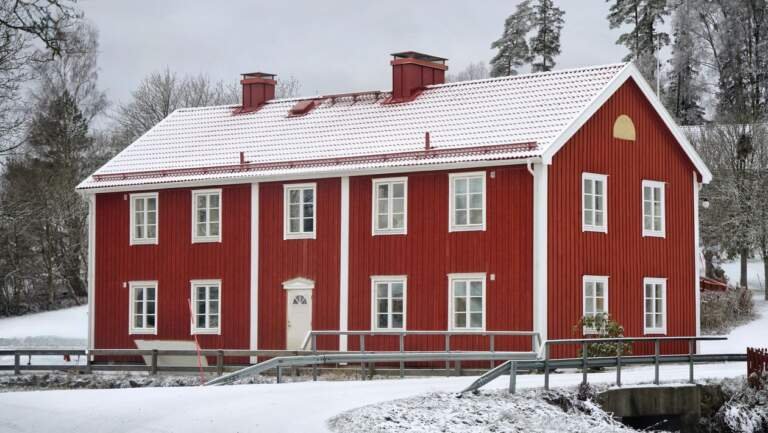

You only notice the power grid when the lights go out. You only think about the water main when the tap runs dry. The most important systems in our lives are the ones working so quietly that we forget they exist.
That idea stretches further than pipes and wires. Neighbors who show up, habits that keep you safe on the road and a business that people can actually find online are all quiet systems too. And like the physical kind, they work best when someone built them before the emergency.
Start With What You Can’t See
Think about a normal winter morning. The pipes in the wall carry water that hasn’t frozen. The furnace cycles on. The roof sheds snow. A hundred small things are happening so you can make coffee and not think about any of it.
When one fails, the effect is out of proportion to the cause. A single frozen line can empty a kitchen of its usefulness for days. A short power cut can spoil a week of groceries. The failure is rarely dramatic. It’s usually a small gap that nobody covered.
I’ve noticed that the people who handle these moments well share one trait. They treat resilience as something you assemble in calm weather, piece by piece, instead of something you improvise while stressed.
Community Is Infrastructure Too
Here’s the thing about neighbors: they’re your fastest emergency service. When a storm takes a tree down across your driveway, the first person with a chainsaw is almost never a professional. It’s the person two doors down.
But that kind of help doesn’t appear out of nowhere. It’s built through ordinary, repeated acts. Lending a ladder. Checking on an older neighbor during a cold snap. Dropping off extra food. Showing up to the local meeting even when it’s boring.
The people who benefit most from community support tend to be the same people who give more than they take. It’s not a trade, exactly. It’s a habit that makes everyone’s life a little more secure. To see practical paths for building that kind of support where you live, you can learn more and pick the one that fits your schedule.
A few low-effort ways to start:
- Learn the names of the five or six households closest to you, and write them down
- Share a phone number or group chat for emergencies
- Offer one skill you have, even if it feels small
- Check in on anyone who lives alone during extreme weather
- Join one local group, and show up three times before deciding if it’s for you
- Keep a short list of who owns tools, a generator or a truck
None of this requires being a hero. It requires being known.
I saw this play out after a heavy ice storm in a neighborhood I used to visit. Within a day, someone had set up a shared charging station on a porch and a list of who had a generator. Nobody organized it formally. The relationships were already there, so the response was too.
Safe, Efficient and Seen on the Road
Now take that mindset abroad. Travel strips away most of your usual safety net. You don’t know the neighborhood, the local rules or who to call. That makes preparation feel like a chore, but it’s actually the thing that lets you relax.
Experienced travelers tend to develop quiet systems of their own: copies of documents stored in two places, a plan for a lost phone, a habit of telling someone back home where they’re staying. They aren’t paranoid. They’ve just seen enough small problems turn into big ones.
If you want a rundown of the practical habits smart travelers use to stay safe, efficient and visible worldwide, click here. A few of the basics are worth remembering no matter where you’re headed:
- Share your itinerary with one person at home
- Keep a backup payment method separate from your wallet
- Save offline maps before you lose a signal
- Know the local emergency number, because it isn’t always the one you expect
- Register with your country’s travel service if it offers one
- Trust the feeling that something is off, and leave
The word “visible” in that mix surprised me at first. It sounds like the opposite of safe. But being visible to the right people, such as the friend who knows your plan, matters a lot. Being invisible is how people go missing.
Why Visibility Matters for Work Too
Visibility isn’t only a personal safety thing. It’s also how businesses get chosen.
Take a trade like trace heating, where contractors install heating cable on pipes and tanks to keep them from freezing. The work is technical and mostly hidden behind insulation. But when a line freezes at six in the morning, the customer doesn’t browse. They pull out a phone and search. Whoever shows up first, with clear information and a phone number that works, gets the call.
That’s true for almost every local service: plumbers, electricians, cleaners, accountants. You can be excellent and still lose work because nobody can find you.
So what does basic digital visibility involve? Nothing mysterious:
- A website that loads quickly on a phone
- Accurate hours, address and phone number everywhere you’re listed
- A short, plain description of what you do and where
- Real customer reviews, answered politely
- Photos of actual work, not stock images
- A way to contact you in under thirty seconds
Most small businesses I’ve seen skip half of these, then wonder why the phone is quiet. The fixes aren’t expensive. They’re just easy to postpone because nothing breaks the day you skip them. The loss is slow, a missed call here and a lost customer there, and it never sends a warning.
Put It Together: A Resilience Checklist
The common thread is simple. Quiet systems work because someone set them up before they were needed. A short personal version looks like this:
→ At home: know which pipes and lines are exposed, and protect them before winter
→ In your street: know your neighbors and give them a reason to know you
→ On the road: share your plans and keep backups of what matters
→ In your work: make it easy for the right people to find you
Pick one this week. Not all four. The goal isn’t to become a survivalist, it’s to reduce the number of nasty surprises in your life.
I’d also suggest reviewing the list once a year. Neighbors move, phone numbers change and websites drift out of date. Quiet systems need a little maintenance, just like the physical ones.
Conclusion
The things that keep us safe are rarely dramatic. They’re the pipes that don’t freeze, the neighbor who answers the door, the friend who knows where you are and the business you can find in two taps. Build them while the weather is calm, and when it isn’t, you’ll hardly notice the storm.